Advanced Driver Assistance Systems (ADAS): Revolutionizing Driving Safety in the USA
November 8, 2025 6:01 am
🚘 Advanced Driver Assistance Systems (ADAS): Revolutionizing Driving Safety in the USA
Introduction
Modern vehicles are evolving faster than ever. From automatic emergency braking to adaptive cruise control, Advanced Driver Assistance Systems (ADAS) are now shaping the future of automotive safety across the United States.
These systems use sensors, cameras, radar, and artificial intelligence to monitor surroundings, help avoid accidents, and make driving smoother and smarter. Whether you drive a Ford F-150, Tesla Model S, or a BMW i7, ADAS technology is now standard in most new vehicles sold in 2025.
Advanced Driver Assistance Systems (ADAS) refer to a collection of technologies designed to automate, adapt, and enhance vehicle systems for safety and better driving.
They rely on:
Cameras to detect lane markings, vehicles, pedestrians
Radar/LiDAR sensors to measure distance and speed
AI algorithms to make split-second safety decisions
ADAS can either assist the driver or take partial control to avoid collisions — forming the foundation of autonomous driving.
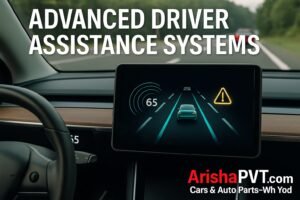
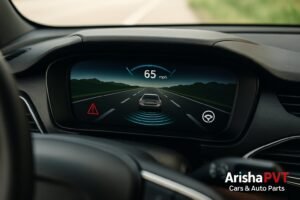
Modern Car Dashboard with ADAS Visualization – ArishaPVT.com
Core ADAS Features Explained
Feature
Function
Benefit to Drivers
Adaptive Cruise Control (ACC)
Automatically adjusts vehicle speed to maintain a safe following distance
Reduces driver fatigue on highways
Lane Keeping Assist (LKA)
Keeps vehicle centered in its lane
Prevents drifting or unintentional lane departure
Automatic Emergency Braking (AEB)
Detects obstacles and brakes if the driver doesn’t react
Lower Repair Costs: Predictive maintenance alerts prevent mechanical failures before they happen.
Enhanced Driver Comfort: Features like adaptive cruise and lane-keeping reduce fatigue during long commutes.
Higher Resale Value: Vehicles with ADAS retain value better as buyers seek safety-focused options.
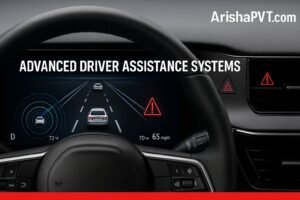
Modern Car Dashboard with ADAS Visualization – ArishaPVT.com
Top Automakers Leading ADAS Innovation
Brand
System Name
Key Highlight
Tesla
Autopilot / Full Self-Driving (FSD)
Continual software updates via cloud
Ford
BlueCruise
Hands-free highway driving
GM (Chevrolet / GMC)
Super Cruise
Lane-change automation with mapping
Mercedes-Benz
Drive Pilot
SAE Level 3 certified in select states
Toyota
Safety Sense 3.0
Affordable, reliable ADAS suite
Volvo
Pilot Assist / LiDAR Vision
Built for ultimate occupant protection
Challenges & Limitations of ADAS
Despite its benefits, ADAS still faces challenges:
Sensor Interference: Heavy rain, fog, or snow can block cameras or radar.
High Repair Costs: Damaged sensors in bumpers or windshields are expensive to replace.
Driver Over-reliance: Many users trust ADAS too much, forgetting it’s only assistance.
Data Privacy: Some systems store driving behavior and location data in the cloud.
ADAS and Insurance in the USA
Insurance providers increasingly factor ADAS technology into premiums. Cars with collision avoidance and blind-spot systems report up to 40% fewer claims.
Electric vehicles (EVs) are at the forefront of integrating ADAS with self-driving technologies.
Top EVs with Best ADAS Systems (2025):
Tesla Model Y / S Plaid – Full Self-Driving features
Lucid Air – DreamDrive Pro with 32 sensors
Rivian R1T – Off-road adaptive control
BMW i7 – Highway Assistant (hands-free)
Ford F-150 Lightning – BlueCruise 1.3 with lane automation
🚗 Learn more about electric innovation at HelpfulHub.com — “Long Range Electric Vehicles” and “Hybrid SUV Deals in Canada.”
Consumer Demand in the U.S.
A 2025 JD Power survey reveals:
68% of U.S. car buyers want ADAS features standard, not optional.
74% say safety tech influences their buying decision.
59% would pay $1,000 – $2,000 extra for advanced systems.
This surge in demand is pushing manufacturers to include ADAS even in budget vehicles and used cars.
ADAS Maintenance Tips
To keep ADAS functioning correctly:
Regularly clean sensors and cameras.
Re-calibrate after windshield or bumper repairs.
Avoid aftermarket parts that block radar.
Keep your software updated (OTA or service center).
Final Thoughts
Advanced Driver Assistance Systems are not just features — they’re the stepping stones toward self-driving cars and a safer automotive future.
For U.S. drivers, ADAS reduces accidents, saves fuel, and makes driving stress-free. Whether you’re buying a pickup truck, luxury sedan, or electric SUV, check its ADAS rating before signing the deal.