Chevrolet Silverado 2026 Buyer Guide: Price, Specs, Towing, EV Range, Trims, and Real-World Advice for US Truck Buyers
Quick Answer Box
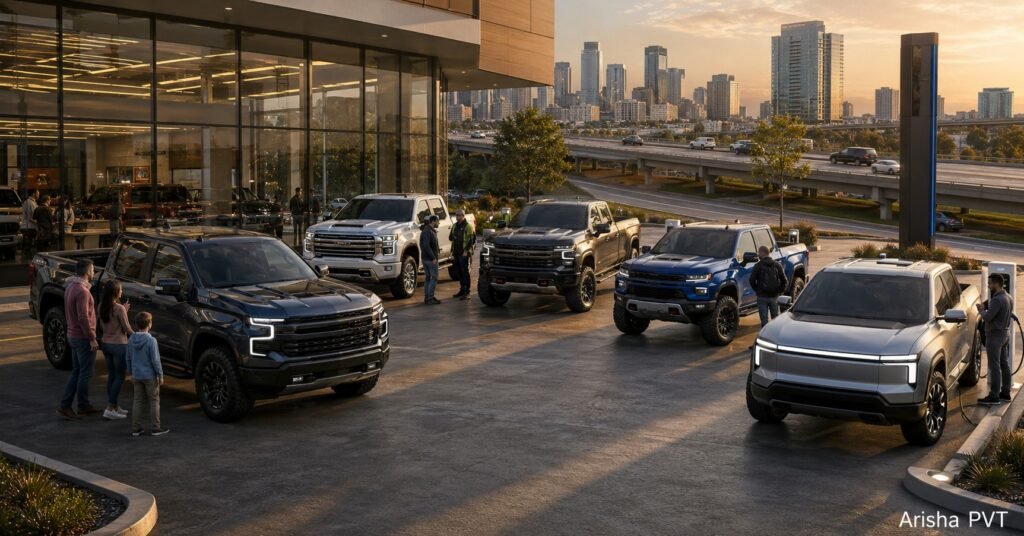
The 2026 Chevrolet Silverado is a full-size truck family that includes the Silverado 1500 for everyday truck buyers, Silverado HD for serious towing and work use, and Silverado EV for drivers who want electric pickup capability. The best Silverado depends on your use case. Choose a Silverado 1500 for daily driving and moderate towing, an HD model for heavy trailers, a Trail Boss or ZR2 for off-road use, and the Silverado EV if range, charging access, and electric torque fit your lifestyle.
What Is the Chevrolet Silverado?
The Chevrolet Silverado is Chevrolet’s full-size pickup truck nameplate. In the US market, it competes directly with trucks such as the Ford F-150, Ram 1500, GMC Sierra, Toyota Tundra, and Nissan Titan. The Silverado name covers several kinds of trucks, which is why buyers should not treat every Silverado as the same vehicle.
The Silverado 1500 is the light-duty full-size pickup. It is the most common choice for personal truck buyers, families, small business owners, homeowners, outdoor users, and people who need a truck bed without moving into heavy-duty size and cost.
The Silverado HD includes heavier-duty 2500HD and 3500HD models. These trucks are built for more serious towing and hauling. They are common among contractors, RV owners, agricultural users, landscapers, fleet buyers, and people who regularly tow large trailers.
The Silverado EV is Chevrolet’s electric full-size pickup. It changes the traditional truck formula by using electric motors, large battery packs, strong instant torque, advanced cabin technology, and EV charging instead of a gas or diesel engine. It is especially relevant for buyers watching the future of electric transportation, connected vehicles, and sustainable mobility.
For beginners, the easiest way to understand the Silverado lineup is simple:
- Silverado 1500: Best for most everyday truck buyers.
- Silverado HD: Best for heavy towing, heavy payload, and work-duty use.
- Silverado EV: Best for electric truck shoppers with charging access and range-focused needs.
- Trail Boss: Best for buyers who want a factory off-road look and added trail confidence.
- ZR2: Best for serious off-road capability within the Silverado lineup.
Why the Chevrolet Silverado Matters in 2026
The 2026 truck market is different from the truck market of ten years ago. Buyers still care about power, towing, bed space, and durability, but they also care about advanced safety systems, infotainment screens, driver assistance, fuel costs, EV charging, software updates, and long-term resale confidence.
That is why the Silverado matters now. It sits at the intersection of old-school truck capability and new automotive technology. A buyer can still choose a traditional gas-powered truck with a V8 feel. A work buyer can still step up to a heavy-duty model. An off-road buyer can consider Trail Boss or ZR2. An EV buyer can look at Silverado EV range, electric torque, and charging needs.
For US drivers, full-size pickups are often lifestyle vehicles. A truck may carry kids to school during the week, tow a camper on the weekend, haul mulch from a home improvement store, and handle snow, gravel, dirt roads, or long interstate drives. The right Silverado can do many of those jobs well. The wrong configuration can feel expensive, oversized, inefficient, or underprepared.
The key is matching the truck to the real job. Many buyers overbuy because they assume bigger is always better. Others underbuy because they focus only on monthly payment and ignore towing, payload, axle ratio, tire setup, bed length, cab size, and long-term ownership costs.
Chevrolet Silverado Explained: 1500, HD, EV, Trail Boss, ZR2, and Towing Details
A good 2026 Chevrolet Silverado Guide: Everything US Truck Buyers Need to Know should start with the lineup. The Silverado name can mean different things depending on the badge, trim, engine, and configuration.
Silverado 1500
The Silverado 1500 is the light-duty model. For a daily driver, the Silverado 1500 usually makes more sense than an HD truck because it is easier to live with. It typically feels more comfortable around town, easier to park, and more balanced for mixed use. It can still tow serious weight when properly equipped, but it does not carry the same heavy-duty hardware as a 2500HD or 3500HD.
Silverado HD
The Silverado HD is the serious work member of the family. Chevrolet lists the 2026 Silverado HD with up to 36,000 pounds of maximum available towing, which places it in a different world from normal weekend towing. That kind of rating is for properly equipped heavy-duty configurations, not every HD truck on a dealer lot. :contentReference[oaicite:1]{index=1}
An HD truck makes sense when your trailer is heavy, frequent, commercial, or critical to your lifestyle. Examples include large fifth-wheel campers, heavy construction trailers, livestock trailers, equipment trailers, and fleet use. If you tow only a small boat, utility trailer, or light camper a few times a year, an HD truck may be more truck than you need.
Silverado EV
The Silverado EV is Chevrolet’s electric pickup option. Chevrolet lists the 2026 Silverado EV with up to 478 miles of GM-estimated range and up to 12,500 pounds of maximum available towing, depending on configuration. It also offers strong electric torque, which can make acceleration feel smooth and immediate. :contentReference[oaicite:2]{index=2}
However, an electric truck should be judged differently from a gas truck. Buyers need to think about home charging, public charging access, towing range loss, cold-weather impact, road-trip planning, electricity rates, and charger speed. The Silverado EV can be very appealing, but it fits best when the buyer understands EV ownership.
Trail Boss
The Trail Boss name is aimed at buyers who want a stronger off-road stance without jumping to the most extreme off-road trim. A Trail Boss can be a good choice for dirt roads, campsites, hunting land, snowy areas, and buyers who want factory off-road styling.
ZR2
The ZR2 sits higher as a more serious off-road Silverado. Chevrolet highlights ZR2 equipment such as a factory suspension lift, Multimatic DSSV dampers, front and rear electronic locking differentials, skid plates, off-road bumper treatment, and 33-inch Goodyear Wrangler Territory MT tires on the 2026 Silverado 1500 ZR2. :contentReference[oaicite:3]{index=3}
That does not mean every buyer needs a ZR2. It is excellent for the buyer who truly values off-road capability, but a family commuter may prefer the ride, tire noise, price, and fuel economy balance of a less aggressive trim.
2026 Chevrolet Silverado Price Overview
Pricing changes by trim, drivetrain, cab size, bed length, packages, destination charges, dealer pricing, incentives, region, and availability. That is why buyers should treat online starting prices as a planning tool, not the final out-the-door number.
Chevrolet’s US site lists the 2026 Silverado 1500 from $36,900, the Silverado HD from $45,900, and the Silverado EV from $55,895 in the pages reviewed for this guide. The official pages also show higher trim examples, including LT Trail Boss and ZR2 pricing on the Silverado 1500 page. :contentReference[oaicite:4]{index=4}
Why Starting Price Can Be Misleading
A base price is useful, but most buyers do not purchase the absolute base configuration. A truck can move up in price quickly with four-wheel drive, crew cab, larger bed, technology package, towing package, off-road package, premium interior, larger wheels, upgraded engine, spray-in bedliner, advanced camera systems, and trailering features.
For example, a buyer may start by looking at a work-truck price, then realize they want crew-cab space for kids, four-wheel drive for winter, a larger infotainment screen, heated seats, and better towing equipment. By the time those needs are included, the practical price may sit far above the advertised starting point.
How to Think About Budget
A smart Silverado budget should include more than the monthly payment. Truck ownership can include fuel or electricity, insurance, tires, registration, maintenance, accessories, bed protection, trailer brake equipment, charging equipment for EV buyers, and higher repair costs for advanced technology.
For a beginner buyer, a practical budget should include:
- Expected monthly payment or cash purchase plan
- Insurance quote before buying
- Fuel or charging cost estimate
- Tire replacement cost
- Maintenance schedule
- Accessories such as bed cover, hitch, liners, mats, and tool storage
- Dealer fees, taxes, and registration
- Warranty coverage and extended warranty decision
Chevrolet Silverado 1500 Trims Explained 2026
The Silverado 1500 trim ladder is designed to serve many types of truck buyers. Chevrolet lists the 2026 Silverado 1500 as available in 9 unique models. Buyers should compare exact equipment carefully because a trim name alone does not tell the full story. Cab, engine, drivetrain, package, and axle choices can change how the truck performs. :contentReference[oaicite:5]{index=5}
Work Truck Style Buyer
A basic Silverado 1500 can make sense for business owners, fleet buyers, contractors, or drivers who want capability without paying for luxury features. This buyer usually cares about durability, bed space, vinyl or easy-clean materials, towing basics, and total cost.
Everyday Family Truck Buyer
A family buyer should focus on crew-cab space, rear-seat comfort, safety features, parking visibility, ride comfort, running boards, child-seat access, phone connectivity, and storage. A middle trim often makes more sense than the cheapest or most expensive model.
Premium Comfort Buyer
Higher trims can add larger screens, better seating materials, more camera views, upgraded audio, advanced driver assistance, improved lighting, and more stylish wheels. These features matter if the truck will replace a luxury SUV or serve as a long-distance highway vehicle.
Off-Road Buyer
Trail Boss and ZR2 buyers should think honestly about how much off-road driving they actually do. Factory lifts, aggressive tires, skid plates, and locking differentials can be valuable, but they may also affect road noise, tire cost, and ride comfort.
| Silverado Type | Best For | Pros | Cons |
|---|---|---|---|
| Silverado 1500 | Daily driving, family use, light work, moderate towing | Balanced comfort, capability, trim variety | Can get expensive with options |
| Silverado HD | Heavy trailers, commercial work, large RVs | Serious towing and payload potential | Larger size, higher operating costs |
| Silverado EV | EV buyers, tech-focused drivers, charging-ready owners | Electric torque, long estimated range, modern technology | Charging planning and towing range considerations |
| Trail Boss | Light to moderate off-road use | Factory off-road stance and capability | Not as extreme as ZR2 |
| ZR2 | Serious off-road driving | Advanced off-road hardware | Higher price and more specialized setup |
Chevrolet Silverado Trail Boss 2026 Review: Trail Boss vs ZR2 Difference
The Chevrolet Silverado Trail Boss 2026 review question usually comes from buyers who want an off-road truck but do not know how far they should go. The Trail Boss and ZR2 both look rugged, but they do not target the exact same buyer.
Trail Boss: Practical Off-Road Style
The Trail Boss is the more approachable choice for many owners. It gives the Silverado a stronger off-road look and better trail confidence than a standard street-focused trim. It is useful for gravel roads, muddy jobsite entrances, hunting camps, rural property, beach access areas where allowed, and snowy regions.
The Trail Boss buyer often wants a truck that still works as a daily driver. They may not need the most advanced off-road suspension or front and rear locking differentials. They want capability, but they also care about monthly payment, comfort, family usefulness, and daily practicality.
ZR2: More Serious Off-Road Hardware
The ZR2 is the more specialized off-road Silverado 1500. Chevrolet highlights features such as Multimatic DSSV dampers, electronic locking differentials, skid plates, an off-road cut front bumper, and 33-inch Goodyear Wrangler Territory MT tires. These features make the ZR2 more serious for difficult terrain than a typical appearance-focused off-road package. :contentReference[oaicite:6]{index=6}
The ZR2 buyer should be honest about use. If the truck will spend most of its life commuting, sitting in school pickup lines, and driving on highways, the extra off-road hardware may not be necessary. If the owner regularly explores rocky trails, remote campsites, uneven land, or tough off-road routes, the ZR2 becomes more meaningful.
Which One Should You Choose?
Choose Trail Boss if you want a rugged Silverado that still feels practical for daily life. Choose ZR2 if off-road performance is a major reason you are buying the truck. The ZR2 is not just about appearance. It is for buyers who value suspension, traction, underbody protection, and terrain capability.
Chevrolet Silverado Towing Guide: What Buyers Need to Know
Towing is one of the biggest reasons people shop for a Silverado. But towing numbers can confuse beginners because maximum ratings apply only to specific configurations. A truck’s real towing ability depends on engine, axle ratio, cab, bed, drivetrain, payload, hitch type, trailer weight, passengers, cargo, and options.
The 2026 Silverado 1500 is listed by Chevrolet with up to 13,300 pounds of maximum available towing. The 2026 Silverado HD is listed with up to 36,000 pounds of maximum available towing. The Silverado EV is listed with up to 12,500 pounds of maximum available towing. These are maximum figures when properly equipped, not universal ratings for every truck. :contentReference[oaicite:7]{index=7}
Do Not Shop by Maximum Towing Alone
A common mistake is looking only at the highest number in an advertisement. That number may require a specific engine, drivetrain, bed, cab, axle ratio, wheel package, or towing package. A crew-cab luxury trim with many options may have a different payload rating than a simpler work-focused configuration.
Payload is especially important. Trailer tongue weight counts against payload. So do passengers, luggage, tools, coolers, bed cargo, accessories, and aftermarket parts. A truck may technically tow a trailer, but if payload is exceeded, the setup may be unsafe or uncomfortable.
Real-World Towing Examples
A homeowner towing a small utility trailer may not need an HD truck. A family towing a midsize camper may be happy with the right Silverado 1500. A contractor towing a skid steer or heavy equipment trailer may need an HD diesel. An RV owner with a large fifth-wheel should look carefully at 2500HD or 3500HD configurations.
For EV buyers, towing also affects range. Electric trucks can tow, but pulling a large trailer at highway speeds may reduce range significantly. That does not make an EV truck bad. It simply means planning matters more. A Silverado EV buyer who tows locally may have a different experience from someone towing across multiple states.
Beginner Towing Checklist
- Know the loaded trailer weight, not just empty weight.
- Check tongue weight or pin weight.
- Read the truck’s door-jamb payload sticker.
- Confirm the exact truck’s towing rating by VIN or build sheet.
- Use the correct hitch and brake controller setup.
- Do not forget passengers, cargo, and accessories.
- Practice braking, reversing, turning, and lane changes before long trips.
Chevrolet Silverado Diesel vs Gas Engine: Which Is Better?
The Chevrolet Silverado diesel vs gas engine which is better question depends on how you drive. There is no single best answer for every buyer. Gas, diesel, and electric power each make sense for different use cases.
Gas Silverado
A gas Silverado is often the simplest choice for many buyers. It can work well for daily driving, family use, weekend towing, home projects, and buyers who do not want diesel maintenance or EV charging planning. Gas engines are familiar, widely serviceable, and easy to refuel on road trips.
A gas truck may be the better choice if you drive short trips, tow occasionally, keep the truck for normal personal use, or want a lower entry cost compared with some higher-output diesel or EV options.
Diesel Silverado
A diesel Silverado can make sense when towing is frequent, heavy, or long-distance. Diesel torque is useful for moving weight, especially on highways, grades, and long trips. Diesel buyers often include RV owners, commercial users, heavy trailer owners, and people who put serious mileage on their trucks.
However, diesel ownership can include higher fuel-system complexity, diesel exhaust fluid, emissions equipment, potentially higher maintenance costs, and repair considerations. A diesel truck is not always the best choice for short city trips or buyers who simply like the idea of diesel but do not need the capability.
Silverado EV
The Silverado EV changes the equation. Electric motors deliver instant torque and quiet operation. For a buyer with home charging, local driving, and predictable routes, an electric truck can feel convenient. There are no gas station stops for everyday driving if home charging covers daily needs.
But EV ownership requires planning. Charging speed, public charger reliability, electricity rates, cold weather, towing range, and road-trip stops all matter. EV buyers should think beyond the advertised range and ask: “How will this truck fit my real weekly driving?”
| Power Choice | Best Use Case | Strength | Watch Out For |
|---|---|---|---|
| Gas | Daily driving, occasional towing, family use | Simple refueling and familiar ownership | Fuel cost can rise with heavy use |
| Diesel | Frequent towing, long-distance hauling, work use | Strong torque and towing confidence | Maintenance and emissions-system complexity |
| Electric | Charging-ready owners, tech-focused buyers, local driving | Instant torque, quiet operation, home charging potential | Charging access and towing range planning |
Silverado EV Range, Charging, and Future Mobility Impact
The Silverado EV is one of the most important parts of the 2026 Silverado story because it shows where truck ownership is going. Electric pickup buyers are not only shopping for a truck. They are shopping for a new routine.
Chevrolet lists the 2026 Silverado EV with up to 478 miles of GM-estimated range, up to 775 lb-ft of available torque with Wide Open Watts, and up to 12,500 pounds of maximum available towing. These numbers make the Silverado EV a serious electric truck on paper, but real-world experience depends heavily on how the truck is used. :contentReference[oaicite:8]{index=8}
Who Should Consider the Silverado EV?
The Silverado EV may fit buyers who can charge at home, drive predictable routes, value technology, want strong acceleration, and like the idea of reducing gas station stops. It may also interest fleet buyers that can install charging infrastructure and control daily routes.
A suburban family that drives 40 miles per day and charges overnight may find EV ownership easy. A contractor who tows locally and returns to a depot each night may also make it work. A buyer who regularly tows long distances through rural areas with limited fast chargers should study charging maps very carefully before buying.
EV Charging Considerations
Home charging is the biggest advantage for many EV owners. If your truck starts each morning with enough range for the day, ownership can feel convenient. Without home charging, the experience depends more on local public charging quality.
Important EV charging questions include:
- Can you install a Level 2 charger at home?
- What does your electric utility charge during off-peak hours?
- Are reliable DC fast chargers available on your road-trip routes?
- Will you tow often, and how far?
- Do you live in a cold-weather region?
- Can your household handle charging time without stress?
Towing With an Electric Truck
Electric trucks can tow, but physics still matters. Large trailers add aerodynamic drag and weight. Highway speeds, wind, hills, cold weather, and trailer shape can reduce range. A flat utility trailer is different from a tall camper. A local tow is different from a 600-mile road trip.
That is why Silverado EV buyers should build a realistic towing plan. If you tow a boat 20 miles to a lake, the EV may fit well. If you tow a large travel trailer across remote interstate routes, you need to map chargers, account for trailer parking at charging stations, and build in extra time.
Best Chevrolet Silverado for Family and Work Use
The best Chevrolet Silverado for family and work use is not always the most expensive trim. It is the truck that fits your real life without wasting money on features you do not use.
Best Family Silverado Setup
For families, crew-cab space should be a priority. Rear-seat room matters if you have kids, teenagers, pets, sports gear, or road-trip luggage. Running boards can help younger passengers climb in. A bed cover can keep luggage dry. All-weather mats make cleanup easier. Advanced camera systems can make parking a large truck less stressful.
Family buyers should also pay attention to ride comfort. Large off-road tires and stiff heavy-duty setups may look impressive, but they may not feel ideal during daily school runs or long highway drives. A balanced Silverado 1500 trim often makes more sense than an extreme off-road or heavy-duty configuration.
Best Work Silverado Setup
Work buyers should start with payload, towing, bed length, cab needs, and durability. A contractor may need a long bed, trailer mirrors, work-grade interior, integrated trailer brake controller, bed liner, tool storage, and four-wheel drive. A business owner should also think about uptime, service access, warranty, fuel cost, and resale.
If the truck will tow heavy equipment regularly, an HD model may be the responsible choice. If the truck mostly carries tools and occasionally tows a small trailer, a properly configured Silverado 1500 may be enough.
Family and Work Balance
Many buyers need one truck to do both jobs. This is where configuration matters. A crew-cab Silverado 1500 with the right towing package can be a strong compromise. It can handle family needs during the week and weekend work or recreation tasks without feeling as large as an HD truck.
For a buyer who owns a camper, boat, landscaping trailer, or side-business equipment, the best approach is to write down real weights and real routines before shopping. Guessing can lead to the wrong truck.
Ownership Costs, Maintenance, and Long-Term Silverado Planning
Truck ownership costs go beyond the purchase price. A full-size pickup can cost more to insure, fuel, maintain, park, repair, and equip than a compact SUV or sedan. That does not mean a Silverado is a bad buy. It means owners should plan realistically.
Fuel or Charging Costs
Gas and diesel owners should estimate fuel cost based on real driving, not ideal highway numbers. Stop-and-go driving, towing, off-road tires, lift kits, cold weather, and idling can affect fuel use. Diesel fuel prices also vary by region.
EV owners should estimate electricity cost at home and public fast-charging cost on trips. Home charging can be more predictable, while public fast charging can vary by network, location, and pricing structure.
Tires and Brakes
Full-size trucks use larger tires than small vehicles. Off-road tires can cost more, wear differently, and create more road noise. Heavy towing can increase brake and tire wear. If you choose a ZR2 or aggressive Trail Boss setup, include tire replacement cost in your long-term budget.
Maintenance Considerations
Gas trucks require routine oil changes, filters, fluids, brakes, tires, and inspections. Diesel trucks may add diesel-specific maintenance, fuel filter needs, DEF, and emissions-system awareness. EV trucks reduce some engine-related maintenance, but they still need tires, brakes, suspension checks, cabin filters, cooling-system care, software updates, and battery-related monitoring.
Accessories and Practical Upgrades
Many Silverado owners add accessories soon after purchase. Common upgrades include tonneau covers, bed liners, floor mats, mud flaps, trailer hitches, towing mirrors, step bars, toolboxes, cargo organizers, dash cameras, phone mounts, and all-weather protection.
Choose accessories carefully. Very heavy accessories reduce payload. Poorly installed electrical accessories can create problems. Oversized tires can affect ride, speedometer accuracy, fuel economy, and warranty questions. A practical truck build is usually better than a showy one.
Safety, Smart Driving Systems, and Connected Vehicle Technology
Modern trucks are no longer simple machines with a bed and engine. They are connected vehicles with cameras, sensors, large displays, driver assistance features, smartphone integration, trailer technology, and sometimes hands-free driving systems.
For Silverado buyers, technology can make the truck easier to live with. A large pickup can be difficult to park in tight urban spaces. Camera systems, parking sensors, blind-zone alerts, and trailer views can reduce stress. Trailering technology can help drivers monitor trailer connections, lights, braking, and camera angles.
Technology Features That Matter Most
- Camera views: Useful for parking, hitching, backing, and maneuvering.
- Blind-zone assistance: Important because trucks have large blind spots.
- Trailer technology: Helpful for towing confidence.
- Large infotainment screen: Useful for navigation, media, and settings.
- Wireless phone integration: Reduces cable clutter.
- Head-up display: Helps keep important information closer to the driver’s view.
- Driver assistance: Helpful, but never a replacement for attention.
Safety Advice for New Truck Drivers
If you are moving from a sedan or compact SUV into a Silverado, give yourself time to adjust. A full-size truck is wider, longer, taller, and heavier. It needs more space to turn, more awareness in parking lots, and more stopping distance when loaded or towing.
Beginner truck owners should practice in an empty lot, especially if towing. Learn mirror adjustment, trailer turning, backing, braking distance, hitch checks, and tire pressure. Safety is not just about technology. It is about habits.
Chevrolet Silverado vs Ford F-150 2026 Comparison
The Chevrolet Silverado vs Ford F-150 2026 comparison is one of the biggest decisions in the US truck market. Both trucks have strong brand loyalty, broad trim ranges, serious towing ability, off-road models, and technology features.
Based on Chevrolet’s official 2026 Silverado 1500 information, Silverado offers up to 13,300 pounds of maximum available towing when properly equipped. Ford F-150 details can vary by 2026 configuration and should be checked directly through Ford’s latest official guide or a dealer before purchase. The smartest comparison is not brand vs brand in general. It is exact truck vs exact truck. :contentReference[oaicite:9]{index=9}
Where Silverado Can Appeal
The Silverado can appeal to buyers who like Chevrolet’s truck styling, available V8 character, broad trim selection, ZR2 off-road hardware, Silverado HD capability, and the growing Silverado EV lineup. Some buyers also prefer Chevrolet dealership access, GM technology, or Silverado’s cabin layout.
Where F-150 Can Appeal
The F-150 can appeal to buyers who prefer Ford’s engine lineup, interior approach, hybrid options, towing tools, brand familiarity, or specific trims. It has a deep owner base and strong work-truck presence.
How to Compare Correctly
Do not compare a base Silverado to a loaded F-150 or a luxury Silverado to a work-truck Ford. Compare similar cab, bed, drivetrain, engine, towing package, payload rating, safety features, and final out-the-door price.
| Comparison Point | What to Check | Why It Matters |
|---|---|---|
| Towing | Exact configuration rating | Maximum numbers do not apply to every truck |
| Payload | Door sticker and build sheet | Payload limits affect towing safety |
| Cab Comfort | Rear seat, visibility, noise, storage | Important for families and commuters |
| Technology | Cameras, screens, towing tech, driver assistance | Makes large trucks easier to use |
| Ownership Cost | Insurance, fuel, tires, maintenance | Final cost goes beyond payment |
Future Automotive Trends: Where Silverado Fits Next
The Silverado is part of a larger future transportation shift. Trucks are becoming more connected, more software-driven, more electrified, and more specialized. Buyers now compare torque and towing, but they also compare charging speed, driver assistance, digital displays, camera systems, and long-term technology support.
Electric Trucks Will Keep Growing
Electric trucks will not replace every gas and diesel truck overnight. Heavy towing, rural driving, charging gaps, and cost will keep traditional trucks relevant. But EV trucks will continue to grow among buyers with home charging, predictable routes, and interest in quiet electric performance.
Smart Towing Technology Will Matter More
Truck towing used to depend mainly on engine strength and driver experience. Those still matter, but modern towing also uses cameras, sensors, brake controllers, trailer apps, tire-pressure monitoring, and stability systems. These tools can help beginners tow with more confidence when used correctly.
Off-Road Trucks Will Stay Popular
Trail Boss and ZR2-style trucks reflect a wider trend. Buyers want adventure-ready vehicles even if they spend much of their time on pavement. Automakers know this, which is why off-road trims continue to receive factory upgrades, visual identity, and lifestyle marketing.
Ownership Will Become More Digital
Connected vehicles can receive software updates, app-based controls, subscription-based features, remote diagnostics, and digital service reminders. This can add convenience, but buyers should understand which features require subscriptions and which remain standard after purchase.
Practical Expert Insight
The most practical Silverado advice is this: do not buy the truck you imagine using once a year. Buy the truck that fits your real weekly life, then make sure it can safely handle your biggest realistic job.
A Silverado can be a smart purchase when configured correctly. It can also become an expensive mismatch when buyers chase maximum specs, appearance packages, or monthly-payment deals without checking payload, towing, comfort, and long-term ownership costs.
Common Mistakes to Avoid
- Buying by maximum towing number only: Always verify the exact truck’s rating.
- Ignoring payload: Payload often limits real-world towing before the tow rating does.
- Overbuying HD capability: An HD truck may be unnecessary for light personal use.
- Underestimating EV charging needs: Silverado EV ownership works best with a clear charging plan.
- Choosing off-road tires for looks only: They may affect noise, comfort, and replacement cost.
- Skipping insurance quotes: Premium trims and EV trucks can change insurance costs.
- Forgetting accessories: Bed covers, mats, hitches, and liners add real cost.
- Not test-driving with family needs in mind: Bring car seats, passengers, or gear if possible.
FAQ: Chevrolet Silverado 2026
1. Is the 2026 Chevrolet Silverado a good truck for families?
Yes, the Silverado can be a good family truck when configured correctly. A crew-cab Silverado 1500 is usually the best place to start because it offers useful rear-seat space, a comfortable cabin, and enough capability for many family needs. Families should focus on safety features, parking cameras, running boards, storage, rear-seat comfort, and ride quality. A heavy-duty or extreme off-road model may not be necessary unless the family also tows heavy trailers or regularly drives on rough terrain.
2. What is the difference between Silverado 1500 and Silverado HD?
The Silverado 1500 is the light-duty full-size truck, while Silverado HD models are built for heavier towing and hauling. The 1500 is better for most daily drivers, homeowners, family buyers, and moderate towing needs. The HD lineup is better for large RVs, heavy equipment trailers, commercial work, farming, and frequent heavy towing. The HD may offer more capability, but it also brings larger size, higher operating costs, and a more work-focused driving feel.
3. Should I buy a Silverado Trail Boss or ZR2?
Choose the Trail Boss if you want a rugged factory off-road look with practical daily usability. It is a strong choice for dirt roads, campsites, snow, and mild to moderate off-road use. Choose the ZR2 if off-road capability is a major priority. The ZR2 adds more specialized hardware, including advanced dampers, locking differentials, skid plates, and aggressive off-road equipment. For mostly highway and family driving, Trail Boss may be enough. For serious trail use, ZR2 makes more sense.
4. Is the Silverado EV good for towing?
The Silverado EV has strong towing potential, and Chevrolet lists up to 12,500 pounds of maximum available towing on the 2026 Silverado EV. However, EV towing requires careful planning because trailer weight, wind resistance, speed, temperature, hills, and charging access can affect range. It may work very well for local towing or predictable routes. For long-distance towing, buyers should map chargers, understand charging time, and consider how trailer size affects real-world range.
5. Is a diesel Silverado better than a gas Silverado?
A diesel Silverado can be better if you tow heavy trailers often, drive long distances under load, or need strong torque for work. A gas Silverado may be better for daily driving, occasional towing, lower complexity, and easier ownership. Diesel can bring more towing confidence, but it can also involve diesel exhaust fluid, emissions equipment, fuel filter needs, and potentially higher maintenance costs. The best choice depends on your actual driving and towing routine.
6. What Silverado is best for a first-time truck buyer?
A first-time truck buyer should usually start with a Silverado 1500 crew cab in a practical middle trim. This type of setup can provide comfort, useful technology, bed space, and towing ability without the size and cost of an HD truck. New truck buyers should avoid buying more capability than they need. They should test-drive the truck in city streets, parking lots, and highways, then compare insurance, fuel, maintenance, and accessory costs before deciding.
7. How should I choose the right Silverado for towing a camper?
Start with the camper’s loaded weight, not the empty brochure weight. Add water, propane, food, luggage, gear, passengers, and hitch weight. Then compare that number with the exact truck’s towing and payload ratings. A Silverado 1500 may work for many smaller or midsize campers when properly equipped. Larger travel trailers and fifth-wheel campers may require a Silverado HD. Always verify ratings by VIN, door sticker, and official towing guide before buying.
8. Is the Silverado EV range enough for daily driving?
For many daily drivers, the Silverado EV’s listed maximum range can be more than enough, especially with home charging. A buyer who drives predictable local routes may rarely need public charging. The bigger question is how the truck will be used beyond commuting. Long road trips, towing, cold weather, and limited public charging access can change the experience. Before buying, compare your weekly mileage, home charging options, and road-trip routes.
9. What are the main ownership costs of a Silverado?
Major ownership costs include payment, insurance, fuel or electricity, tires, maintenance, registration, accessories, and repairs after warranty. Off-road trims may need more expensive tires. Diesel models can include diesel-specific maintenance. EV models may need home charging installation but can reduce some engine-related maintenance. Buyers should also budget for bed liners, tonneau covers, floor mats, towing equipment, and cargo accessories because many truck owners add them soon after purchase.
10. Should I wait for future Silverado updates?
Waiting can make sense if you want a possible redesign, new technology, or more EV options. Buying now can make sense if you need a truck soon, find the right configuration, and get a fair deal. Truck updates are continuous, but waiting forever can delay a practical purchase. If your current vehicle is unreliable or your work requires a truck, focus on the best available configuration today. If your need is flexible, compare current incentives and upcoming model news.
Final Practical Checklist Before Buying a Chevrolet Silverado
- Decide whether you need Silverado 1500, HD, or EV.
- Write down your real towing and payload needs.
- Check the exact truck’s door sticker and build sheet.
- Compare gas, diesel, and EV ownership costs honestly.
- Get an insurance quote before signing paperwork.
- Test-drive the truck on city roads, highways, and parking areas.
- Check rear-seat comfort if you have family passengers.
- Confirm bed length and garage fit.
- Review towing packages, camera systems, and safety technology.
- Plan for accessories such as bed liner, cover, mats, and hitch equipment.
- For Silverado EV, confirm home charging and public charging routes.
- Compare final out-the-door price, not only monthly payment.
- Check official Chevrolet and dealership information before purchase.
Explore More Chevrolet Silverado Guides
Compare Silverado EV, Trims, Towing, Engines, and Rivals
Use these detailed Chevrolet Silverado buyer guides to compare electric trucks, trim levels,
towing power, off-road models, diesel engines, and Ford F-150 alternatives before choosing your next pickup.
Explore More Chevrolet Silverado Guides
Compare Silverado EV, Trims, Towing, Engines, and Rivals
Use these Chevrolet Silverado buyer guides to compare electric trucks, trim levels, towing power, off-road models, diesel engines, and Ford F-150 alternatives before choosing your next pickup.