2026 Chevrolet Silverado EV Buyer Guide: Range, Price, Towing, Charging, Trims, and Real-World Ownership Advice
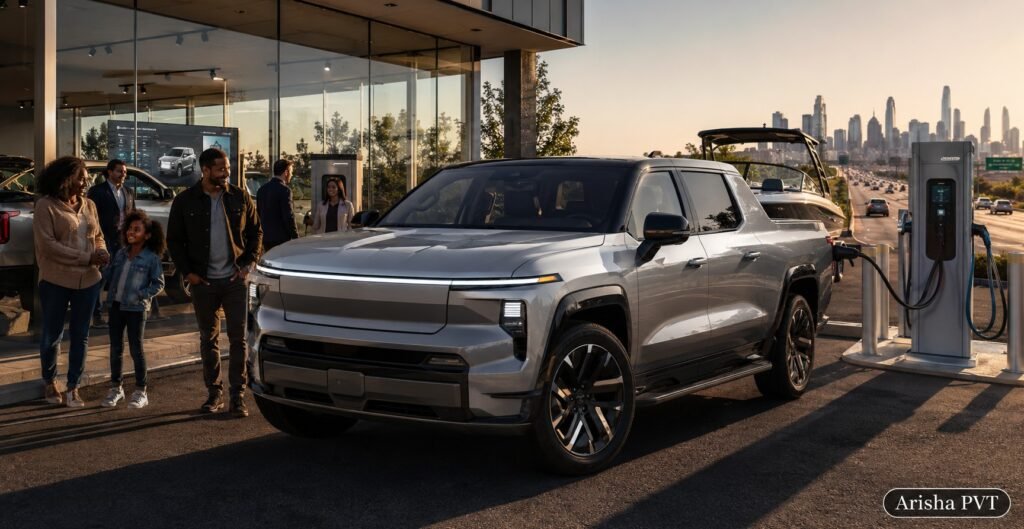
Introduction
The Silverado EV is one of the most important electric pickup trucks for US buyers because it brings battery-electric driving into a familiar full-size truck format. For many American drivers, a truck is not just transportation. It is a work vehicle, family hauler, weekend trailer puller, road trip machine, and daily commuter all in one.
That is why the 2026 Chevrolet Silverado EV matters. It enters a market where electric vehicles are no longer limited to compact crossovers or luxury sedans. Buyers now want electric trucks that can handle towing, highway travel, jobsite power needs, family comfort, road safety, and long-term ownership costs. The Silverado EV tries to answer that demand with serious range, strong torque, available off-road-focused Trail Boss capability, fast charging support, and smart vehicle technology.
Quick Answer Box
The 2026 Chevrolet Silverado EV is a full-size electric pickup designed for buyers who want truck capability without gasoline. It offers long driving range, strong instant torque, available towing technology, public fast-charging support, and trims for work, daily driving, and off-road use. It makes the most sense for drivers who can charge at home, drive regular weekly routes, want lower routine maintenance, and need a modern truck for commuting, family use, light work, or planned towing. Always compare real-world range, charging access, and final price before buying.
2026 Silverado EV Overview
The 2026 Silverado EV is Chevrolet’s all-electric full-size pickup. It is not simply a gasoline Silverado with a battery added underneath. It uses an electric platform designed to support large battery packs, strong dual-motor performance, advanced software features, and truck-focused capability.
For a beginner EV buyer, the easiest way to understand this truck is to think of it as a modern pickup that replaces the traditional engine, transmission, exhaust system, and fuel tank with battery-powered motors and charging equipment. Instead of stopping at gas stations every week, owners usually charge at home overnight and use public fast chargers on longer trips.
Chevrolet positions the truck around four major buyer needs:
- Long range: useful for commuters, rural drivers, contractors, and road trip families.
- Truck strength: towing, payload, cargo space, and confident torque delivery.
- Smart technology: large screens, connected vehicle features, route planning, and available driver-assistance systems.
- EV ownership savings potential: fewer routine maintenance items than a gas truck, though charging setup and tire costs still matter.
The Silverado EV also arrives at a time when the US pickup market is changing. Traditional truck buyers still care about towing and toughness, but many also want lower fuel dependence, quieter cabins, home charging, and advanced automotive technology. That mix makes the Silverado EV especially relevant for people who want a future-ready truck without moving into a small EV crossover.
Why the Silverado EV Matters Now
Electric pickup trucks are important because trucks dominate many parts of American vehicle culture. A full-size pickup serves small-business owners, families, farmers, outdoor travelers, fleet managers, and suburban commuters. If electric transportation is going to become normal in the US, EV trucks need to feel practical, not experimental.
The Silverado EV matters because it targets the heart of that market. Buyers who might not consider a compact electric car may take an electric truck seriously if it can tow, carry gear, power tools, handle winter commuting, and drive long distances between charges.
Automotive Industry Background
The electric truck segment has quickly become one of the most competitive areas in future mobility. Ford entered early with the F-150 Lightning. Rivian built a premium adventure-focused R1T. GMC brought the Sierra EV and Hummer EV into the conversation. Chevrolet now gives GM a more mainstream electric pickup option under one of America’s most recognized truck names.
This is not just about replacing gasoline. It is also about software, connected vehicles, battery management, charging networks, digital ownership tools, and smart transportation systems. A modern EV truck is closer to a rolling technology platform than a basic work vehicle.
Why US Buyers Are Paying Attention
US drivers are watching electric pickups for practical reasons. Gas prices can change quickly. Home solar and home charging are becoming more common. Public charging networks continue to expand. Families want safer, quieter, more advanced vehicles. Businesses want predictable operating costs. Outdoor drivers want power outlets, storage flexibility, and smooth torque on dirt roads.
However, buyers are also cautious. They want to know whether the range is real, whether towing is practical, whether public charging is reliable, and whether an EV truck will still make sense after five or eight years of ownership. Those are the questions this guide answers.
Silverado EV Range and Real-World Driving
Silverado EV range is one of the truck’s strongest selling points. Chevrolet advertises up to 478 miles of GM-estimated range on its official 2026 Silverado EV page, while some dealer and industry listings have referenced higher EPA-estimated figures for specific work-truck battery configurations. Because range can vary by trim, battery, tires, temperature, speed, cargo, and towing load, buyers should verify the exact window sticker and official configuration before purchasing. :contentReference[oaicite:1]{index=1}
For daily driving, range is more than a headline number. A driver who commutes 35 miles per day may not need the longest-range version. A rural driver who travels between job sites may benefit greatly from a bigger battery. A family that often drives from Texas to Colorado, Florida to Georgia, or California to Nevada should think carefully about fast-charging routes and highway efficiency.
How Real-World EV Range Works
Gas trucks lose efficiency when towing, driving fast, climbing hills, or carrying heavy loads. Electric trucks do the same, but buyers notice it more because charging stops take longer than fuel stops. Highway speed is a major factor. Driving at 75 mph uses more energy than driving at 60 or 65 mph. Cold weather can also reduce range because the battery and cabin heating system need energy.
For a Silverado EV owner, the best approach is to think in usable range, not just maximum range. If a truck has a long estimated range, the owner may still plan road trips around charging from roughly 10% to 80% because fast charging usually slows as the battery gets fuller. That means road trip planning should focus on charger spacing, charging speed, and backup charging options.
Practical Range Examples
- Daily commuter: A 40-mile round-trip commute may only require charging a few nights per week if the owner has home charging.
- Suburban family: School runs, grocery trips, sports practice, and weekend errands fit easily within normal EV use.
- Contractor: A jobsite driver carrying tools may want a larger battery to reduce midday charging needs.
- Road trip driver: Highway travel is practical, but route planning matters more than in a gas truck.
- Towing owner: Trailer shape, trailer weight, wind, speed, and terrain can reduce range significantly.
The key point is simple: the Silverado EV gives shoppers one of the stronger range stories in the electric pickup segment, but real-world results depend on how the truck is used.
Silverado EV Price Estimate and Buying Costs
Silverado EV price estimate research can be confusing because EV pricing often changes with trim availability, destination fees, dealer inventory, software packages, incentives, and battery options. Chevrolet currently advertises the 2026 model as starting at $55,895, but higher trims and larger battery versions can cost much more. :contentReference[oaicite:2]{index=2}
For smart car buying, shoppers should not compare only the starting MSRP. A lower-priced EV truck may have less range, fewer comfort features, or less towing technology. A higher-priced trim may include a larger battery, premium cabin materials, bigger screens, advanced driver-assistance features, off-road hardware, or stronger performance settings.
Cost Considerations Beyond MSRP
When shopping for the Silverado EV, consider the full ownership picture:
- Destination fee: This can add a meaningful amount to the advertised price.
- Home charger installation: A Level 2 charger may require electrical work.
- Electricity rates: Charging at home is usually cheaper than public DC fast charging, but rates vary by state and utility.
- Insurance: EV trucks can be expensive to insure because of battery, weight, repair complexity, and technology sensors.
- Tires: Heavy EV trucks may wear tires faster than lighter vehicles, especially with aggressive driving.
- Accessories: Tonneau covers, floor liners, bed protection, charging adapters, and towing mirrors may add cost.
- Tax credits or incentives: Federal, state, local, and utility incentives can change, so verify current eligibility before purchase.
Beginner Buying Advice
Before choosing a trim, write down your real driving needs. These questions matter more than chasing the most expensive version.
A good dealer conversation should include range by trim, charging speed, trailer ratings, payload rating, available incentives, warranty coverage, battery coverage, tire replacement expectations, and software features. Ask for the exact Monroney window sticker and compare it with Chevrolet’s official build tool.
Trims, Batteries, and Silverado EV Trail Boss Explained
The 2026 Silverado EV lineup is designed to serve different buyers. Work-oriented trims focus on utility. LT-style trims target everyday comfort and technology. The Silverado EV Trail Boss adds a more rugged personality for buyers who want an electric truck with off-road-inspired hardware and styling.
Chevrolet has promoted the Silverado EV with multiple battery and trim combinations, including work-truck, LT, and Trail Boss-style versions. Some third-party trim reports list Standard, Extended, and Max battery options with different range and pricing combinations, while Chevrolet’s consumer page highlights the headline starting price, maximum range, torque, and towing figures. Buyers should confirm the exact trim and battery availability in their ZIP code. :contentReference[oaicite:3]{index=3}
What Makes the Trail Boss Interesting?
The Trail Boss name matters because Chevrolet truck buyers already associate it with off-road attitude. For the electric version, the Trail Boss is aimed at drivers who want more than a quiet commuter pickup. Reports on the 2026 model describe the Trail Boss with features such as a lifted stance, all-terrain tires, off-road-focused hardware, strong torque, and high towing capability. :contentReference[oaicite:4]{index=4}
This does not mean every buyer needs the Trail Boss. If your driving is mostly highway commuting, school pickup, and weekend errands, a more comfort-focused trim may make more sense. If you regularly travel on dirt roads, visit campsites, tow recreational gear, or simply want a tougher appearance, the Trail Boss becomes more attractive.
Useful Trim Comparison Table
| Trim / Version | Best For | Pros | Cons |
|---|---|---|---|
| Work Truck / Utility-Focused Version | Fleets, contractors, practical truck owners | Useful capability, simpler mission, strong range potential depending on battery | May feel basic compared with premium trims |
| LT / Daily Driver Version | Families, commuters, first-time EV truck buyers | Balanced comfort, tech, usability, and range | Higher price with options |
| Trail Boss | Outdoor drivers, off-road style shoppers, adventure truck buyers | Rugged look, strong torque, off-road personality, useful towing ability | All-terrain tires and off-road hardware may reduce efficiency |
| Max Battery Versions | Long-distance drivers, rural owners, towing planners | Most range flexibility and fewer charging stops | Typically more expensive and heavier |
EV Truck Towing Capacity and Real-World Use
EV truck towing capacity is one of the biggest reasons shoppers research the Silverado EV. Chevrolet lists up to 12,500 pounds of max available towing for the 2026 Silverado EV, which places it among the strongest electric pickup options for buyers who need real truck capability. :contentReference[oaicite:5]{index=5}
However, towing capacity and towing range are not the same thing. A truck may be rated to pull a heavy trailer, but the distance it can travel between charging stops depends on trailer weight, trailer shape, road speed, hills, wind, temperature, tire pressure, and cargo. A flat utility trailer behaves very differently from a tall travel trailer that catches wind like a wall.
Real-World Towing Scenarios
For local towing, the Silverado EV can make a lot of sense. A contractor pulling equipment across town, a homeowner taking a utility trailer to a hardware store, or a family towing a small boat to a nearby lake may enjoy instant torque and quiet operation. The truck’s electric motors can deliver smooth power without gear shifts, which can make towing feel relaxed.
Long-distance towing requires more planning. A camping trip across multiple states can still be possible, but the driver must map chargers carefully. Some DC fast charging stations are not trailer-friendly. You may need to park, unhook, charge, reconnect, and continue. That adds time and effort.
Towing Tips for Beginner EV Truck Owners
- Use the truck’s towing mode and route planning tools when available.
- Check trailer weight, tongue weight, payload, and gross combined weight rating.
- Do not assume max towing equals ideal towing for every trip.
- Reduce highway speed when towing to improve efficiency.
- Plan charging stops before starting long trips.
- Look for pull-through chargers when towing a trailer.
- Keep tires properly inflated and inspect trailer tires before leaving.
The Silverado EV has strong towing potential, but the smartest owners will treat towing as a planned activity, not a guess-and-go situation.
Charging Time and Public Charging
Charging time and public charging are central to electric truck ownership. A Silverado EV owner will usually charge in three main ways: home Level 1 charging, home Level 2 charging, and public DC fast charging.
Level 1 charging uses a standard household outlet. It is slow and best for emergencies, light use, or plug-in convenience when the truck sits for a long time. Level 2 charging is the better home solution for most EV truck owners because it can add meaningful range overnight. DC fast charging is for road trips, busy workdays, or quick top-ups away from home.
Some Chevrolet and dealer materials reference high-power DC fast charging and the ability to add a significant amount of range quickly under ideal conditions. One dealer overview cites a GM-estimated 124 miles of range in as little as 10 minutes at 350-kW DC fast charging stations. Real charging speed depends on charger output, battery temperature, state of charge, station reliability, and vehicle configuration. :contentReference[oaicite:6]{index=6}
Practical Charging Table
| Charging Type | Best Use | Pros | Watch-Outs |
|---|---|---|---|
| Level 1 Home Outlet | Backup charging, very light driving | No major setup for many homes | Too slow for most full-size EV truck owners |
| Level 2 Home Charger | Daily ownership | Convenient overnight charging, lower cost than many public chargers | May require electrician and panel capacity check |
| Public DC Fast Charging | Road trips and quick top-ups | Fastest charging option when equipment works well | Costs more, station reliability varies, trailer access can be difficult |
| Workplace / Fleet Charging | Businesses and repeat routes | Useful for predictable daily operations | Requires planning, chargers, parking rules, and load management |
Home Charging Advice
If you are serious about buying a Silverado EV, evaluate home charging before the truck arrives. Ask an electrician whether your panel can support a Level 2 charger. Check whether your utility offers time-of-use electricity rates. Charging late at night can be cheaper in some areas. Also think about cable reach, parking location, weather protection, and whether you may add another EV later.
For apartment or condo residents, charging can be more complicated. Public charging may work for some drivers, but relying only on public charging can reduce convenience and increase cost. Before buying, test nearby charging stations at the times you would actually use them.
Silverado EV vs Ford F-150 Lightning vs Rivian R1T
The electric pickup market is no longer empty. The most natural comparisons are Silverado EV vs Ford F-150 Lightning and Silverado EV vs Rivian R1T. Each truck has a different personality.
The Ford F-150 Lightning appeals to buyers who want an electric version of America’s best-known pickup family. The Rivian R1T feels more like a premium adventure truck with clever storage and outdoor-focused design. The Silverado EV aims for long-range capability, full-size truck usefulness, and strong towing numbers.
Ford’s own 2026 towing guide indicates F-150 Lightning towing capability varies by configuration and max towing requires the right package, while Rivian lists Gen 2 R1T towing up to 11,000 pounds for certain Max battery versions. Chevrolet lists the Silverado EV at up to 12,500 pounds of max available towing. :contentReference[oaicite:7]{index=7}
EV Truck Comparison Table
| Truck | Personality | Strengths | Possible Drawbacks |
|---|---|---|---|
| 2026 Chevrolet Silverado EV | Long-range full-size electric truck | Strong advertised range, high towing rating, useful truck format, Trail Boss option | Higher trims can be expensive; towing trips need charging planning |
| Ford F-150 Lightning | Familiar electric F-150 experience | Known truck name, practical cabin, strong everyday usability | Range and towing range depend heavily on battery and configuration |
| Rivian R1T | Premium adventure EV truck | Outdoor lifestyle features, strong performance, clever storage | Smaller bed feel, premium pricing, less traditional truck identity |
The best choice depends on your daily route, charging access, towing frequency, family space needs, dealer support, and total ownership budget.
Ownership, Maintenance, and Daily Living
The ownership experience is where the Silverado EV becomes different from a gasoline pickup. There are fewer traditional maintenance items because there is no oil change, spark plug service, exhaust system, or conventional automatic transmission maintenance in the same way a gas truck requires.
That does not mean maintenance disappears. EV owners still need tire rotations, cabin air filters, brake fluid checks, coolant system inspections, wiper blades, alignment, suspension checks, software updates, and brake inspections. Because electric trucks are heavy and powerful, tire care becomes especially important.
Daily Driving Experience
Most drivers will notice three things immediately: quietness, smooth acceleration, and instant torque. The Silverado EV can feel calm in traffic and strong when merging onto highways. There is no engine vibration at stoplights. For family use, that quiet cabin can make school runs, road trips, and daily commuting feel more relaxed.
Regenerative braking can also change the driving experience. The truck can recover energy when slowing down, which may reduce brake wear in normal use. Some drivers love one-pedal-style driving once they get used to it. Others prefer a more traditional feel. Test driving matters.
Auto Accessories and Practical Add-Ons
Useful accessories may include all-weather floor liners, bed mats, tonneau covers, cargo organizers, trailer accessories, portable tire inflators, emergency charging adapters, and high-quality charging cable storage. A tonneau cover can also help protect cargo and may improve aerodynamics slightly depending on design.
Because EV trucks carry advanced sensors and cameras, buyers should be careful with aftermarket bumpers, lift kits, wheel changes, or accessories that may interfere with driver-assistance systems. Always check compatibility before modifying the truck.
Safety, Smart Driving, and Vehicle Technology
Modern electric trucks are packed with automotive technology. The Silverado EV offers a digital ownership experience that can include large screens, connected services, navigation, charging information, trailer tools, and available advanced driver-assistance systems depending on trim and package.
For road safety, technology should support the driver, not replace attention. Driver-assistance systems can help reduce fatigue, maintain lane position, manage following distance, or assist during long highway drives, but the driver remains responsible for safe operation.
Smart Driving Systems
Connected vehicles can help owners monitor charge status, precondition the cabin, find charging stations, and plan routes. For EV truck owners, route planning is especially important because the system may estimate arrival battery percentage and suggest charging stops.
Future mobility trends will push these features further. Expect more integration between vehicles, home energy systems, public charging networks, smart transportation systems, and possibly bidirectional power features. Electric trucks may increasingly serve as mobile energy tools for camping, worksites, and emergency backup scenarios.
Safety Considerations for EV Trucks
- Respect the truck’s weight and stopping distance.
- Use towing mirrors and trailer brake settings properly.
- Learn how regenerative braking behaves on wet or icy roads.
- Do not overload payload or exceed trailer ratings.
- Keep software updated when recommended by the manufacturer.
- Use compatible tires with the right load rating.
- Check charging cables and plugs for damage.
Common Mistakes to Avoid When Buying an Electric Pickup
Many first-time EV truck buyers focus only on range and price. Those are important, but they are not the whole story. A truck can have impressive specs and still be a poor fit if the owner cannot charge conveniently or if the chosen trim does not match towing needs.
Mistake 1: Buying Without a Charging Plan
The best EV ownership experience usually starts at home. If you buy first and think about charging later, you may face delays, installation costs, or frustration. Check your electrical panel, parking setup, and utility rates before finalizing the purchase.
Mistake 2: Confusing Maximum Range With Daily Range
Maximum range is measured under specific conditions. Real-world range changes with speed, weather, tires, terrain, cargo, and towing. Use the official number as a guide, not a promise for every drive.
Mistake 3: Ignoring Payload
Truck shoppers often talk about towing, but payload matters just as much. Passengers, tools, cargo, hitch weight, and accessories all count. A trailer that looks fine on paper may create payload challenges once the truck is loaded with people and gear.
Mistake 4: Assuming Public Charging Is Always Easy With a Trailer
Many public charging stations were designed for cars, not trucks with trailers. Pull-through chargers are improving, but they are not everywhere. If you tow often, study charging station layouts before road trips.
Mistake 5: Overbuying or Underbuying the Trim
The most expensive trim is not always the smartest choice. The cheapest trim is not always the best value either. Match battery size, comfort features, towing equipment, and technology to your real driving habits.
Practical Expert Insight
The Silverado EV is most compelling for buyers who can use its strengths every week. If you drive predictable daily miles, have home charging, want strong acceleration, need a useful truck bed, and tow locally or occasionally, it can be a very smart modern pickup choice.
It becomes less simple for buyers who regularly tow heavy trailers across long distances in areas with limited charging infrastructure. The truck may still do the job, but the ownership experience will require planning. That is not a failure of the vehicle. It is the current reality of electric truck towing and public charging access.
From a future transportation perspective, the Silverado EV shows where full-size trucks are heading. More torque, more software, more charging integration, more connected services, and more energy flexibility will become normal. But from a buyer’s perspective, the smartest decision is still practical: choose the truck that fits your actual routes, budget, charging access, and cargo needs.
The best buyers for Silverado EV are not just EV enthusiasts. They are practical drivers who understand how they use a truck and want a quieter, more advanced, lower-maintenance alternative to a traditional gasoline pickup.
Pros and Cons of Electric Pickup Trucks
Pros and cons of electric pickup trucks should be considered honestly. Electric pickups are exciting, but they are not magic. They solve some problems and create new planning requirements.
| Category | Benefits | Drawbacks |
|---|---|---|
| Performance | Instant torque, smooth acceleration, quiet cabin | Heavy weight can affect tire wear and handling feel |
| Ownership Costs | No gasoline, fewer routine engine maintenance items | Insurance, tires, charger setup, and repairs can be expensive |
| Towing | Strong torque and smooth pulling power | Towing can reduce range and complicate charging stops |
| Daily Use | Home charging convenience, quiet commuting, modern tech | Less convenient without home or workplace charging |
| Future Mobility | Connected systems, charging integration, sustainable mobility potential | Technology changes quickly and resale values can be hard to predict |
Step-by-Step Beginner Guidance Before Buying
If you are new to electric vehicles, do not start with the trim brochure. Start with your life. The Silverado EV can be excellent for the right owner, but your routine should guide the purchase.
Step 1: Calculate Your Weekly Miles
Write down your average weekday miles, weekend miles, and occasional long trips. A driver who averages 250 miles per week has different needs than someone who drives 700 miles per week across rural job sites.
Step 2: Check Home Charging
Call an electrician before buying. Ask about Level 2 charger installation, panel capacity, permitting, garage outlet placement, and future EV expansion. This step can prevent expensive surprises.
Step 3: Identify Your Towing Reality
Do you tow a small utility trailer, boat, horse trailer, camper, or work equipment? How often? How far? At what speed? A local towing owner and a cross-country camper owner need different planning strategies.
Step 4: Compare Insurance Quotes
Get quotes before purchase. Electric trucks can cost more to insure than expected because of battery systems, sensors, body structure, and repair procedures.
Step 5: Test Drive More Than One EV Truck
Compare the Silverado EV with the Ford F-150 Lightning and Rivian R1T if possible. Pay attention to seating position, screen controls, visibility, brake feel, ride comfort, turning radius, bed access, and charging port location.
Step 6: Confirm Official Specs
Before signing, confirm the exact trim, battery, range estimate, towing rating, payload rating, included charging equipment, warranty, incentives, and dealer fees. Do not rely only on online summaries.
FAQ: 2026 Chevrolet Silverado EV
1. Is the 2026 Silverado EV a good truck for daily driving?
Yes, the 2026 Silverado EV can be a strong daily driver for the right owner. It offers quiet operation, smooth acceleration, modern technology, and the convenience of home charging if you have a garage or driveway setup. For commuting, school runs, errands, and weekend use, an electric pickup can feel easier than a gas truck because you may start each morning with a planned charge. The main question is charging access. If you cannot charge at home or work, daily ownership may depend too much on public chargers.
2. How much range does the Silverado EV have?
Chevrolet currently advertises up to 478 miles of GM-estimated range for the 2026 Silverado EV on its official consumer page. Some trim-specific reports and dealer listings reference different range numbers depending on battery size and configuration. Real-world range will vary with speed, weather, tires, cargo, terrain, and towing. A buyer should check the exact range rating on the window sticker for the specific truck being purchased, not just the highest number from online marketing.
3. Can the Silverado EV tow like a real pickup?
The Silverado EV is designed to provide serious truck capability, and Chevrolet lists up to 12,500 pounds of max available towing when properly equipped. That is a strong number for an electric pickup. However, towing range is the bigger real-world question. A heavy or boxy trailer can reduce range significantly, especially at highway speeds. For local towing, the truck may be very practical. For long-distance camper towing, owners should plan charging stops carefully and look for trailer-friendly stations.
4. Is the Silverado EV Trail Boss worth it?
The Silverado EV Trail Boss is worth considering if you want a more rugged electric truck with off-road-inspired style and capability. It makes sense for drivers who travel on dirt roads, visit campsites, tow recreational gear, or simply prefer a tougher truck appearance. However, if your driving is mostly commuting, family errands, and highway trips, a non-Trail Boss trim may offer better efficiency or value. The best choice depends on your roads, budget, tire needs, and how often you will actually use the rugged hardware.
5. Is public charging easy with an electric pickup?
Public charging is improving, but electric pickup owners need to plan more than small EV owners. A full-size truck needs space, and towing a trailer can make charger access harder. Some charging sites have pull-through layouts, while others require tight parking. Fast charging can be very useful on road trips, but charger speed, pricing, reliability, and availability vary. The easiest ownership experience usually comes from home Level 2 charging, with public DC fast charging used mainly for longer drives.
6. Should I buy the Silverado EV or a gas Silverado?
Choose the Silverado EV if you have reliable charging, drive predictable routes, want quiet electric performance, and like modern connected vehicle technology. Choose a gas Silverado if you frequently tow heavy trailers long distances, need very fast refueling in remote areas, or cannot charge at home or work. Neither choice is automatically better. The right answer depends on your driving pattern, local charging access, fuel costs, electricity rates, trailer needs, and long-term ownership budget.
Final Practical Checklist
Use this checklist before buying or ordering a 2026 Chevrolet Silverado EV:
- Confirm the exact trim, battery, range estimate, towing rating, and payload rating.
- Check Chevrolet’s official site and local dealer inventory for current pricing and availability.
- Get a Level 2 home charger installation quote before purchase.
- Compare insurance quotes for the specific trim you want.
- Test drive the Silverado EV, Ford F-150 Lightning, and Rivian R1T if possible.
- Think about your real towing needs, not just maximum towing numbers.
- Map public fast chargers on your common road trip routes.
- Check whether charging stations are trailer-friendly if you tow.
- Budget for tires, accessories, charging equipment, and potential software subscriptions.
- Ask about battery warranty, roadside assistance, and dealer EV service training.
- Review available tax credits, state incentives, utility rebates, and local charging programs.
- Choose the trim that fits your lifestyle instead of chasing the highest spec.
Explore More Chevrolet Silverado Guides
Compare Silverado EV, Trims, Towing, Engines, and Rivals
Use these detailed Chevrolet Silverado buyer guides to compare electric trucks, trim levels,
towing power, off-road models, diesel engines, and Ford F-150 alternatives before choosing your next pickup.
Explore More Chevrolet Silverado Guides
Compare Silverado EV, Trims, Towing, Engines, and Rivals
Use these Chevrolet Silverado buyer guides to compare electric trucks, trim levels, towing power, off-road models, diesel engines, and Ford F-150 alternatives before choosing your next pickup.