2026 Chevrolet Silverado Towing Capacity Guide: Which Silverado Is Best for Boats, Campers, Work Trailers, HD Hauling, and EV Towing?
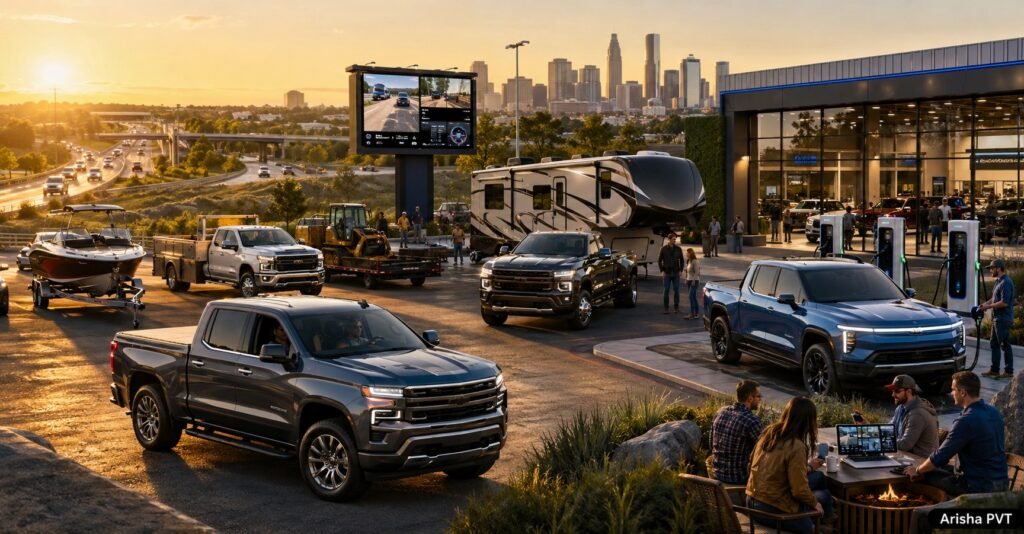
Quick Answer: 2026 Silverado Towing Capacity
For most US buyers, the 2026 Silverado 1500 is the best everyday towing choice, with max ratings reaching up to 13,300 lbs when properly equipped. The Silverado 2500 HD is better for serious campers, equipment trailers, and frequent heavy towing, while the Silverado 3500 HD diesel dually is the strongest option for large fifth-wheel and gooseneck trailers. The Silverado EV can tow impressively for an electric pickup, but range planning becomes more important when pulling heavy loads.
What Silverado Towing Capacity Really Means
Silverado Towing Capacity refers to the maximum trailer weight a specific Silverado configuration can safely pull when properly equipped. That phrase is important because not every Silverado 1500, 2500 HD, 3500 HD, or Silverado EV has the same capability. A regular cab work truck, crew cab luxury trim, diesel HD dually, and electric pickup can all perform differently.
For beginners, towing capacity is not just about engine power. It also depends on cooling, frame strength, brakes, transmission tuning, rear axle ratio, hitch rating, tires, suspension, and Gross Combined Weight Rating. A truck may have impressive horsepower, but if payload is low or the hitch setup is wrong, the real-world towing experience can feel unstable.
That is why smart truck buyers should check the door-jamb payload sticker, the official trailering guide, the dealership build sheet, and the owner’s manual before signing paperwork. The number advertised in marketing is usually a maximum rating for a specific configuration, not a promise that every trim can tow that amount.
2026 Silverado Towing Lineup Overview
The 2026 Silverado lineup gives buyers several paths. The Silverado 1500 is the daily-driver-friendly truck. The 2500 HD moves into serious heavy-duty towing. The 3500 HD is for maximum work and RV capability. The Silverado EV adds instant electric torque, quiet driving, and advanced connected vehicle technology for buyers who want future mobility with truck utility.
| Silverado Model | Best Use Case | Major Pros | Possible Cons |
|---|---|---|---|
| Silverado 1500 | Boats, small campers, utility trailers, family towing | Comfortable daily driving, strong engine choices, easier parking | Not ideal for very large fifth-wheel RVs or heavy commercial loads |
| Silverado 2500 HD | Frequent towing, larger campers, work trailers | More stability, stronger frame, better heavy-load confidence | Higher purchase cost, firmer ride, larger size |
| Silverado 3500 HD | Fifth-wheel RVs, gooseneck trailers, serious work hauling | Maximum towing strength, dually option, excellent diesel capability | Less convenient as a daily city vehicle |
| Silverado EV | Electric truck buyers, modern towing, tech-focused owners | Instant torque, quiet operation, advanced tech, no tailpipe emissions | Towing range can drop significantly, charging stops need planning |
Silverado 1500 Towing Capacity
The Silverado 1500 towing capacity is the sweet spot for many US families. It is strong enough for many fishing boats, side-by-side trailers, small livestock trailers, landscaping trailers, and travel campers. It also remains comfortable enough for commuting, school runs, road trips, and grocery duty.
For buyers who tow only a few weekends per month, the Silverado 1500 can make more sense than jumping into an HD truck. The 1500 is easier to live with, often more refined, and can be equipped with modern comfort features, digital displays, driver-assistance systems, and advanced trailering cameras.
Silverado 2500 HD Towing Capacity
The Silverado 2500 HD towing capacity is aimed at buyers who tow regularly or carry heavier tongue weight. Contractors, farmers, RV owners, and drivers who often cross mountain grades may appreciate the extra cooling, braking confidence, suspension strength, and overall stability.
If your trailer is near the upper limit of a half-ton truck, stepping into the 2500 HD can reduce stress. It may not be as smooth or easy to park as a 1500, but it gives more confidence when crosswinds, long downhill grades, or heavy cargo are part of your lifestyle.
Silverado 3500 HD Towing Capacity
The Silverado 3500 HD towing capacity is for drivers who need maximum pulling strength. This is the model to consider for large fifth-wheel campers, gooseneck horse trailers, heavy equipment trailers, and commercial-grade hauling. A dual-rear-wheel setup can improve stability under heavy loads, especially when towing tall trailers or carrying high pin weight.
The tradeoff is size and daily usability. A 3500 HD dually is not the easiest truck for tight parking lots, urban commuting, or narrow drive-through lanes. But for serious towing, it is the Silverado that gives the strongest long-term capability.
Silverado EV Towing Capability
The Silverado EV towing capability is one of the most interesting parts of the modern truck market. Electric pickups offer instant torque, smooth acceleration, quiet operation, and connected vehicle features that fit the future transportation movement. For local towing, especially where charging is available at home or work, the Silverado EV can be a smart and modern choice.
However, towing with any EV requires realistic range planning. A heavy camper or box trailer creates aerodynamic drag, and that can reduce driving range. EV truck buyers should think about route planning, fast-charging access, charging cost, weather, trailer weight, and how often they tow long distances.
Gas vs Diesel vs EV: Which Silverado Tow Setup Makes Sense?
Choosing the best Silverado engine for towing depends on how you use the truck. A gas V8 can be excellent for moderate towing, lower upfront cost, and simpler ownership. A diesel is usually better for heavy trailers, long-distance towing, stronger low-end torque, and better confidence on grades. An EV can be excellent for smooth local towing, quiet driving, and tech-forward ownership, but charging strategy becomes part of the equation.
| Powertrain Type | Best For | Strengths | Watch-Outs |
|---|---|---|---|
| Gas Silverado | Occasional towing, boats, utility trailers, family use | Lower entry cost, familiar maintenance, good daily driving | Can use more fuel under heavy load |
| Diesel Silverado | Frequent heavy towing, long highway trips, HD use | Strong torque, confident pulling, better suited for heavy loads | Higher purchase price, diesel emissions maintenance |
| Silverado EV | Local towing, tech-focused buyers, home-charging owners | Instant torque, quiet ride, advanced technology | Range drops while towing; charging stops need planning |
Diesel vs Gas Towing Difference
The diesel vs gas towing difference is mostly about torque, efficiency under load, and long-haul confidence. Diesel engines often feel stronger when pulling heavy trailers because they deliver torque low in the rev range. That makes the truck feel less strained when climbing grades or maintaining highway speed with a heavy trailer.
Gas engines are still a smart choice for many owners. If you tow a boat ten times per year, haul mulch in the bed, and mostly use the truck as a family vehicle, a gas Silverado may be more practical. If you tow a fifth-wheel camper across multiple states every month, diesel becomes easier to justify.
Payload vs Towing Capacity: The Number Many Buyers Miss
Payload vs towing capacity is one of the most important topics in truck shopping. Towing capacity tells you how much trailer weight the truck can pull. Payload tells you how much weight the truck can carry inside and on top of the vehicle, including passengers, cargo, tools, accessories, and trailer tongue weight.
This matters because a trailer does not put zero weight on the truck. A conventional travel trailer may place significant tongue weight on the hitch. A fifth-wheel or gooseneck trailer can place even more weight directly over the truck bed. Add a family of four, a cooler, camping gear, bed cover, toolbox, and aftermarket accessories, and payload can disappear quickly.
For beginners, the safest approach is simple: do not shop by max towing alone. Look at the payload sticker on the actual truck you plan to buy. Two Silverado trucks with the same engine can have different payload ratings because of trim, cab size, options, wheels, suspension, and 4WD equipment.
Conventional Towing vs Fifth-Wheel/Gooseneck Towing
Conventional towing vs fifth-wheel/gooseneck towing comes down to hitch location and load style. Conventional towing uses a receiver hitch behind the bumper. This is common for boats, small campers, utility trailers, enclosed trailers, and many work trailers.
Fifth-wheel and gooseneck towing place the connection point in the truck bed. This setup is often used for large RVs, horse trailers, flatbeds, and heavy equipment trailers. It can offer better stability and higher capability, but it also requires the right bed, hitch hardware, payload rating, and careful setup.
If you plan to tow a large RV, do not assume a half-ton truck is enough because the brochure number looks close. Pin weight, payload, axle ratings, tire ratings, and braking confidence matter. For frequent fifth-wheel towing, the Silverado 2500 HD or 3500 HD is usually the more appropriate starting point.
Best Silverado for Boats, Campers, Trailers, and Work Equipment
The best Silverado for boats, campers, trailers, and work equipment depends on the trailer you actually own or plan to buy. A bass boat and a 40-foot fifth-wheel camper are completely different towing jobs. So are a weekend utility trailer and a loaded construction equipment trailer.
Best Silverado for Boat Towing
For most recreational boats, a Silverado 1500 with the right tow package is often enough. Boat owners should consider slippery ramps, four-wheel drive, tongue weight, trailer brakes, and rear camera visibility. A 4WD Silverado can be helpful at wet ramps, especially with heavier boats.
Best Silverado for Camper Towing
For small and midsize travel trailers, the Silverado 1500 may work well. For larger campers, especially tall trailers with high wind resistance, a Silverado 2500 HD can feel more stable. For fifth-wheel RVs, the 2500 HD or 3500 HD should be considered carefully, depending on pin weight and loaded trailer weight.
Best Silverado for Work Equipment
Contractors should think beyond trailer weight. Tools, crew members, fuel tanks, ladder racks, bed storage, and jobsite accessories all reduce available payload. A Silverado HD may cost more upfront, but it can be the better long-term business tool if towing is part of the weekly routine.
Trailering Tech and Safety Features
Trailering tech and safety features are a major reason modern trucks feel more confident than older pickups. Depending on configuration, Silverado models may offer multiple camera views, trailer profiles, trailer light checks, integrated trailer brake control, tow/haul drive modes, blind-zone features, stability systems, and connected vehicle tools.
These systems do not replace good driving habits, but they can reduce stress. A camera view can help align the hitch. Trailer profiles can help organize settings. Blind-zone alerts can help when a trailer extends far behind the truck. Tow/haul mode can change shift behavior and help the truck feel more controlled.
Safety still starts with setup. Use the right hitch rating, check trailer brake function, confirm tire pressure, balance cargo properly, secure chains, test lights, and avoid overloading. Technology helps, but physics still matters.
Ownership, Maintenance, Cost, and Driving Experience
Silverado Towing Capacity should be evaluated with long-term ownership costs. A bigger truck may tow better, but it can cost more to buy, insure, fuel, maintain, and park. Diesel models may offer excellent towing performance, but diesel exhaust fluid, emissions systems, and higher service costs should be considered. EV models may reduce some maintenance items, but charging access and towing range are major ownership factors.
Maintenance becomes more important when a truck tows regularly. Transmission fluid, differential service, brake wear, tire condition, wheel bearings, cooling system health, and trailer brake maintenance all matter. A truck used for heavy towing should not be treated like a light commuter vehicle.
The driving experience also changes. A Silverado 1500 feels more relaxed as a daily truck. A 2500 HD feels more planted with a heavy trailer. A 3500 HD dually can feel extremely stable under load but bulky when unloaded. A Silverado EV feels quiet and powerful, but long-distance towing requires a more planned mindset.
Practical Expert Insight
The smartest way to choose a Silverado is to buy for your heaviest realistic use, not your rare fantasy use. If you tow a 5,000-lb boat several times a year, a properly equipped Silverado 1500 can be a great match. If you plan to buy a large camper soon, do not purchase a truck that is barely within the limit today. Leave margin for passengers, water, cargo, tools, accessories, and future upgrades.
Also, never ignore payload. Many towing mistakes happen because buyers focus only on the big trailer number and forget tongue weight or pin weight. For confident ownership, aim for a setup that gives you breathing room instead of constantly operating at the edge of the rating.
The future of towing will include more electric trucks, smarter trailer cameras, connected trailer diagnostics, advanced driver assistance, better route planning, and improved charging networks. But even as automotive technology evolves, the fundamentals remain the same: match the truck to the trailer, respect the ratings, maintain the equipment, and drive with patience.
FAQ: Silverado Towing Capacity
1. What is the best Silverado for towing a camper?
For small or midsize travel trailers, a properly equipped Silverado 1500 can be a strong choice because it balances towing strength with daily comfort. For larger campers, especially tall or heavy trailers, the Silverado 2500 HD is usually more confidence-inspiring. If you are towing a large fifth-wheel RV, the Silverado 3500 HD may be the better option, especially when payload and pin weight are high. Always compare the loaded trailer weight, tongue or pin weight, passengers, cargo, and the truck’s actual door-sticker payload rating.
2. Is diesel better than gas for Silverado towing?
Diesel is usually better for frequent heavy towing because it offers strong low-end torque and relaxed highway pulling. It can feel more confident on hills and long trips with a heavy trailer. Gas can still be the better choice for buyers who tow occasionally, want a lower purchase price, or prefer simpler ownership. The right choice depends on how often you tow, how heavy your trailer is, and whether long-distance hauling is part of your routine.
3. Can the Silverado EV tow like a normal truck?
The Silverado EV can tow impressively for an electric pickup, especially for local or regional use. Its instant torque and quiet power delivery can make towing feel smooth. The main difference is range planning. Heavy trailers, tall campers, cold weather, highway speeds, and headwinds can reduce EV range. Buyers should consider home charging, public fast-charging access, trailer-friendly charging stations, and realistic trip planning before choosing an EV truck for frequent long-distance towing.
4. Why does payload matter if towing capacity is high?
Payload matters because trailers place weight on the truck. A travel trailer adds tongue weight to the hitch, while a fifth-wheel or gooseneck trailer adds pin weight in the bed. Passengers, tools, cargo, accessories, bed covers, and fuel also use payload. A truck can have a high towing rating but still run out of payload before reaching that maximum trailer number. That is why buyers should check the payload sticker on the exact truck, not just the brochure.
5. Should beginners buy more towing capacity than they need?
Yes, within reason. It is smart to leave a safety margin instead of towing at the absolute limit every trip. Extra margin can improve stability, braking confidence, cooling performance, and long-term durability. However, buying far more truck than you need can increase cost, reduce daily comfort, and make parking harder. Beginners should list their real trailer weight, expected cargo, passengers, and future needs, then choose a Silverado configuration with comfortable breathing room.
Final Practical Checklist Before Choosing a Silverado Tow Setup
- Check the official towing guide for the exact model, engine, cab, bed, drivetrain, and axle setup.
- Look at the payload sticker on the actual truck before buying.
- Know your trailer’s loaded weight, not just dry weight.
- Include passengers, cargo, tools, accessories, fuel, and tongue or pin weight.
- Choose a Silverado 1500 for balanced daily driving and moderate towing.
- Choose a Silverado 2500 HD for frequent heavy towing and larger campers.
- Choose a Silverado 3500 HD for maximum fifth-wheel, gooseneck, and commercial capability.
- Consider Silverado EV towing if you have charging access and realistic route planning.
- Use the correct hitch, trailer brake controller, safety chains, mirrors, and tire pressures.
- Confirm all ratings with Chevrolet, the owner’s manual, and a trusted dealership before purchase.
Explore More Chevrolet Silverado Guides
Compare Silverado EV, Trims, Towing, Engines, and Rivals
Use these detailed Chevrolet Silverado buyer guides to compare electric trucks, trim levels,
towing power, off-road models, diesel engines, and Ford F-150 alternatives before choosing your next pickup.
Explore More Chevrolet Silverado Guides
Compare Silverado EV, Trims, Towing, Engines, and Rivals
Use these Chevrolet Silverado buyer guides to compare electric trucks, trim levels, towing power, off-road models, diesel engines, and Ford F-150 alternatives before choosing your next pickup.